Making the subject line of your email stand out is the most important factor in getting it read. Here are a few of my ideas; please share your own in the comments!
• Be specific with your topic.
• Make it catchy and interesting.
• Use your topic as a reference to what you want them to remember you for.
As times change, we have to accept how our clients will need our still images for all sorts of motion. We must now be aware to add “still photography only” to our licensing terms. Using still images for motion is a large option that should be paid for instead of granted unknowingly.
When we don’t hear back from clients after submitting our bid for the job, I can almost guarantee (most often) that it is because they don’t have a budget anywhere close to our total. Assume that- before spending too much time and effort trying to follow up to make the job happen.
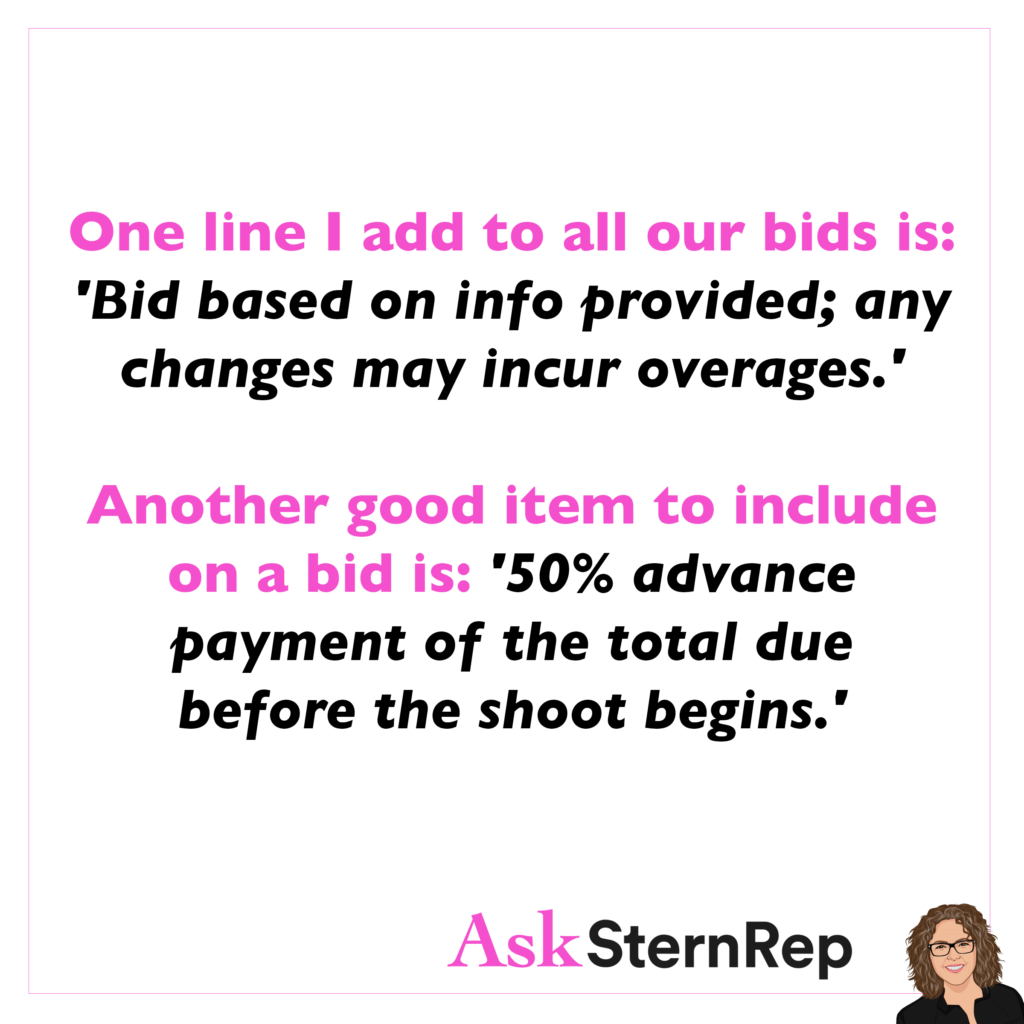
Overage fees for changes/additions are our responsibility to request financial coverage that is not already included in our approved budget.
Dealing with financials before agreeing to or starting the changed work is one of the many “unsaid” standard business practices covered by the photographer/director/producer.
I’m in a situation where we’re working with a client who constantly asks for changes. At the same time, they never mention the budget or how much the changes will cost. It’s always up to us to ask, inform them, explain the implications, and then get permission. It feels awkward, but it’s something we’re expected to do right away. Don’t make the changes and then ask—that’s riskier. Ask immediately because they want the changes to happen quickly. Make sure to cover yourself, even adding a bit of padding to account for potential changes. If this is a client who constantly makes changes, try to set yourself up to protect yourself.
The secret to success for photographers is not to show their ‘cards’ under pressure. Relax and always remind yourself that everything gets done in the end with a great supportive team. Diva photographers are a thing of the past, and no one wants to work with them, whether they are high-profile and talented or not. People want a light-hearted, fun set with NO DRAMA.
Bidding a job must clearly spell out all the details that our numbers are based on. We risk paying out of our pockets if we ASSUME clients will know our bid-based parameters, such as shot count, the production building time needed to avoid overages, how many rounds of retouching changes are included, etc. Risking miscommunication is our timely responsibility to manage before it occurs.
I’m seeing a lot of trouble happening with photographers because we tend to assume it’s hard to cover everything. We assume that clients are going to know our restrictions or understand what we meant by specific dates, production costs, or other details. Everything needs to be spelled out clearly, including timing and scheduling. Do clients understand the schedule? We have to stay on top of it to ensure they do, even if we’ve already stated it or made it clear in an email. Don’t assume anything, whether it’s how many images you’re going to shoot, how many images are included in usage, or anything else related to your production. If you’re doing a big production and need the client’s approval by a certain date because you require a specific amount of time to start and finish before the shoot date, that has to be clearly stated in the bid and reiterated in an email. Make sure clients know everything, and don’t assume they understand anything.
You can’t be everything to everyone. Success is to have a portfolio that speaks highly to specific clients. Don’t try to bid on every job. Instead, win every job you bid on.