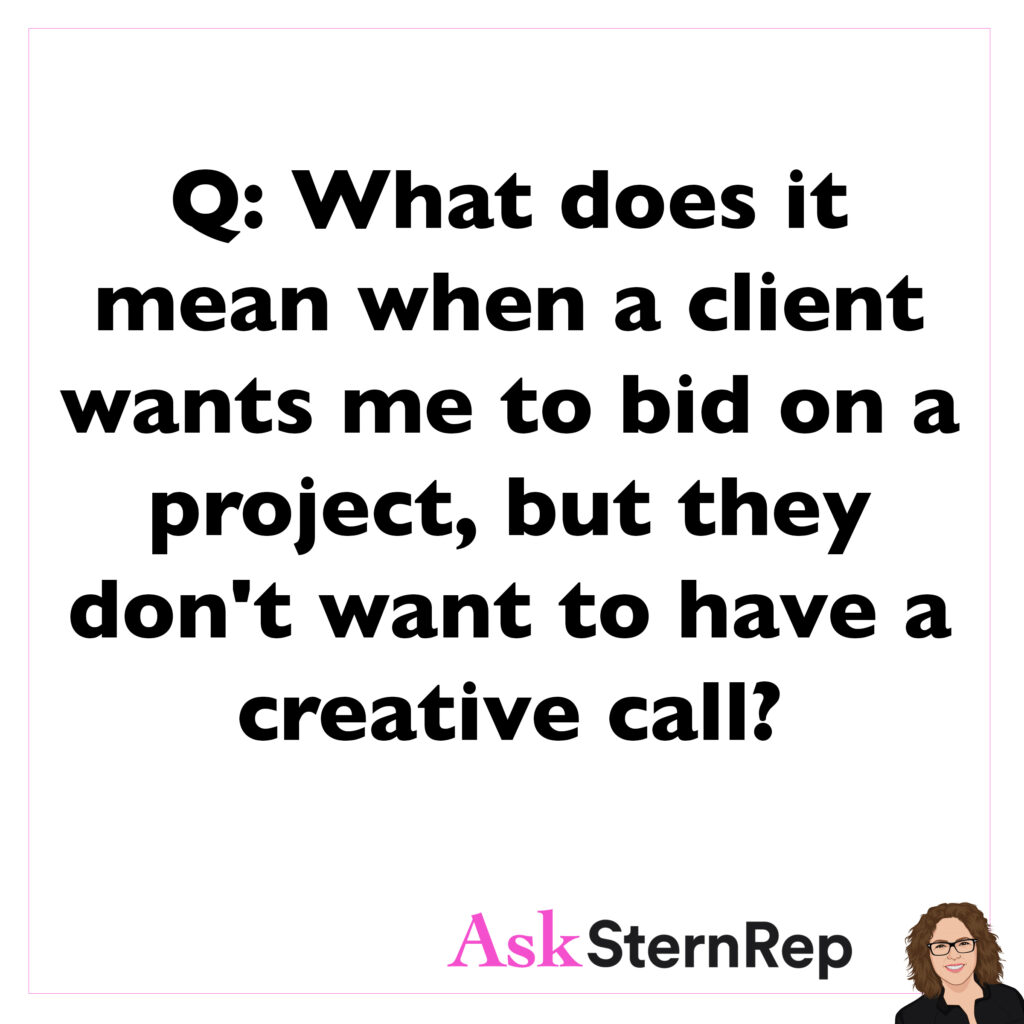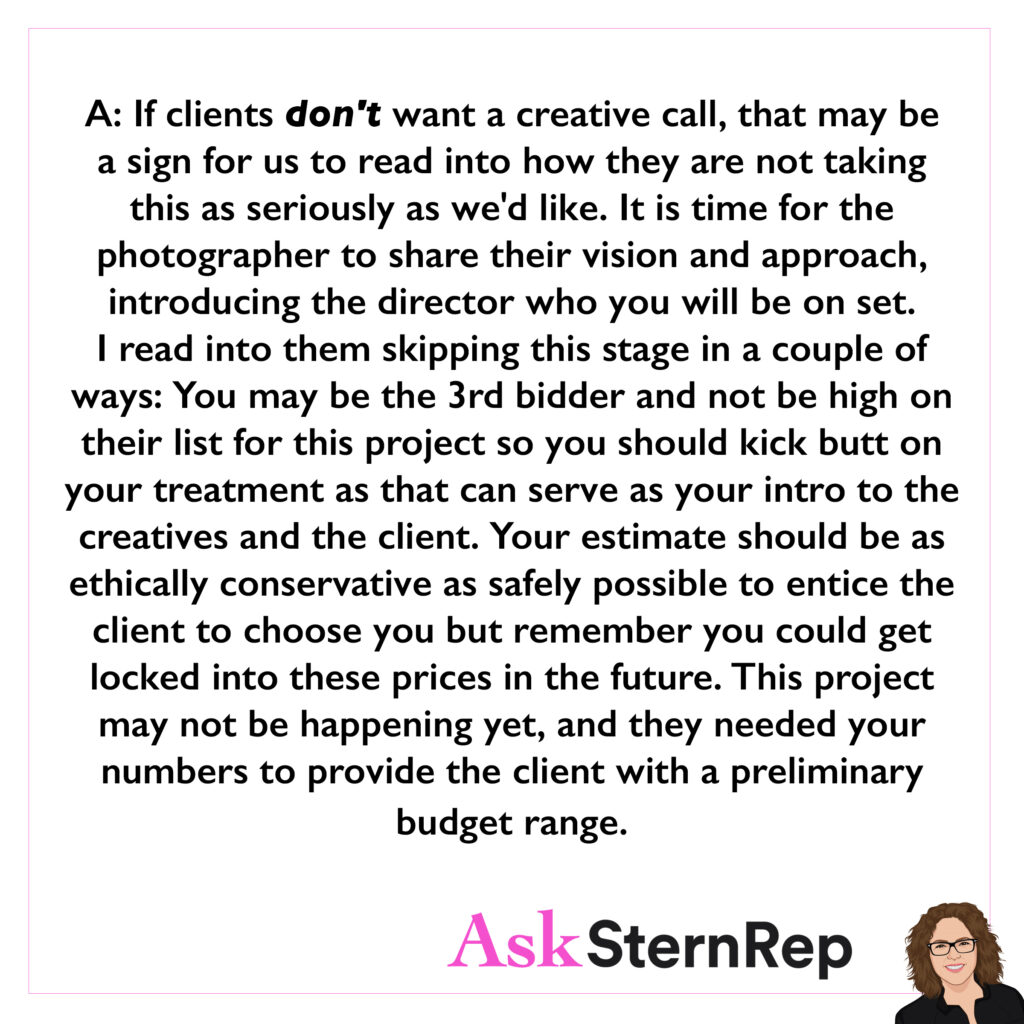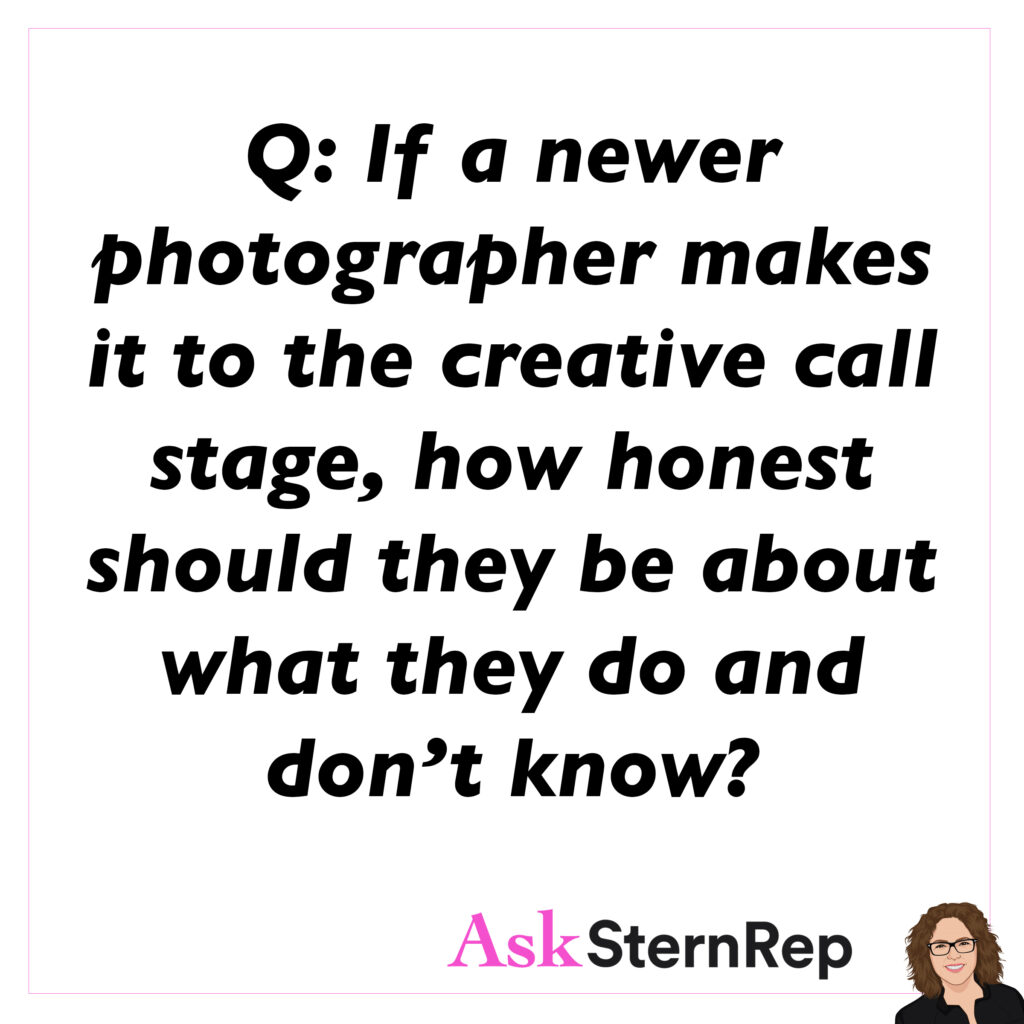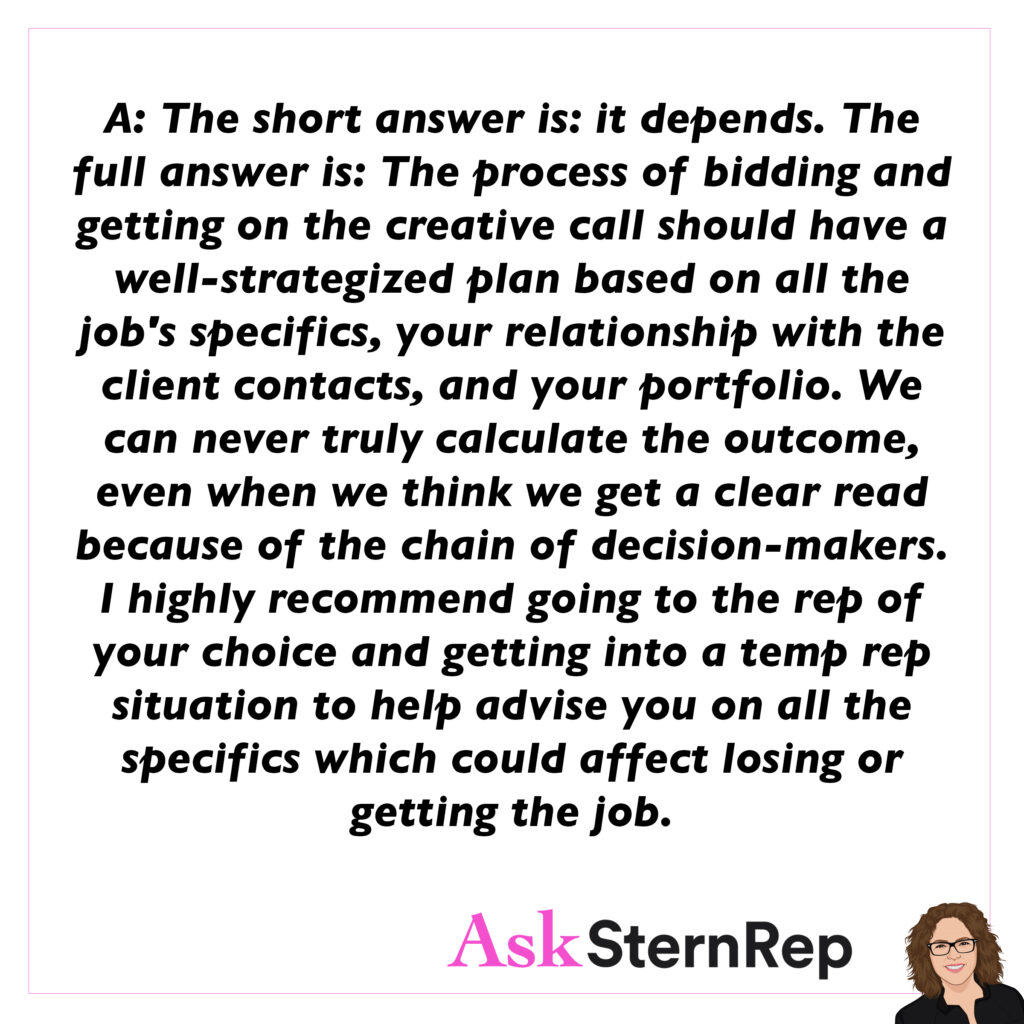
Creative Calls

Decision Making of Selecting a Photographer

Q:

How much influence do art directors have in the decision making process of selecting a photographer for a project?

A:

The decision-making process of selecting the photographer goes through many twists and turns, mostly involving the producer, creatives (art director/creative directors or designers), and the clients. The producers usually bring in the selection of photographers for the creatives to choose their top 3. The creatives will then inform the producer who is their top choice. Our goal is always to be the ‘recommend’ to the client, but ultimately, the client decides.

Major Bid + Huge Production

Q:

Hello! I have a question. My producer and I did a major bid for the product launch using many models, it involved a huge production of set building, and various teams for what they asked for. We ended up not getting the project, it was nothing that was asked of us as far as production, sets and look. Is there a way to approach the agency when bidding that allows us to be bidding the same job – apples for apples?

A:

While we can’t predict or control the bidding process, we can ask every question to help us understand the production details. The key is to have an A+ producer and make sure you get on a creative call, as that is where we get our answers. The purpose of three-way bidding is to protect clients in a fair apple to apple comparison, so they are not overpaying. Our goal is to protect ourselves by understanding all the information, even when we may have to dig around to get that info.

Choose Your Words Wisely

Admit it; you are SELLING a product. Approach the conversations with a potential client as a LISTENER, ready to open the pathway to let your true purpose be heard. Choose your words wisely instead of filling any space. Trust me; there won’t be much empty space.

Creative Calls: What You Need to Deliver

What you need to deliver in the creative video call to get the job:

  • Enthusiasm
  • Unexpected Bonus Ideas
  • Throw in a relevant comment or two to reinforce your specialty, which has you on their shortlist for this project

When asked to bid on a job you’ll probably have a creative call. This is more important than ever because it’s video. It used to be a phone call and it wasn’t as personable. They didn’t really get a sense of you as much. Now it really weighs in on their decision who they are going to choose for the job. You have to have your enthusiasm to show your excitement for this job because they’re handing it over to you. They want to know who you are going to be on their set. Once you get the creative deck which is the mood board and the shot list, think about technical ideas because that’s your place in this. What are you going to bring to the job? They want to hear from you. Why exactly did they choose you for this bid? Think about that one thing that separates you and is unique to you for this job. Fit it into the conversation and have a question in mind or a thought, something you’re going to say about a shot that you can relate to and you know that is why they brought you in on this.

Time to Talk

The creative call is the time to give your technical examples of how you will be bringing this project to life. It may seem like the time to listen, but it’s really the time to talk. 

The creative call feels like you’re just getting their information so you can do the bid. That’s really not what’s happening. They want to hear from you. Make sure you give examples of what you’re going to do so they can achieve that look they’re going for. Be really specific. Give examples. It’s your time to step forward. That’s really what these calls are about. Be the one on the call giving the information vs just receiving.

Be Fully Present on Video Creative Calls

Give everything you’ve got on these video ‘Creative Calls’ by being fully present. 

Let the client feel like they know who you are with a bit of warmth in your facial reactions. 

Be prepared with ideas or comments, mentioning their website to show you are their ultimate team player whom they can count on to understand their branding goals. 

Have questions ready to go that will suggest your production strategies and game-plan, all to help them get a sense of what you offer.

I was just on a video creative call and came up with some tips to help you secure the job from these calls. Video calls can often feel stiff and awkward, so it’s important to create a sense of warmth and presence. Make sure to maintain direct eye contact and avoid positioning your camera off to the side, as this can make it harder to connect.

Do your homework by researching their website and mentioning specific details on the call. This shows how serious you are and demonstrates that you understand their brand. Reference something from their website or the call—such as the shot list or details about the talent—to show your comprehension of their needs.

Prepare some questions in advance, whether they relate to talent, color retouching, the shot list, or lighting. These questions don’t necessarily have to be literal questions but can serve as opportunities to showcase your strategy and production ideas. Be yourself and give them a sense of how you’ll solve their problems effectively when they hire you.

Elevator Pitches

Have a genuine self sales chat (elevator pitch) ready to go for an awkward portfolio showing or a zoom meeting when you need something to share about yourself.

Be prepared with a few tidbits that won’t sound like “sales,”  but more like you sharing a story of an experience you had that shows how you like to work.

We know that you probably aren’t a salesperson if you’re listening to this and you’re more of a creative person, but you are a creative business. You need to have a sales pitch, or an elevator pitch. It needs to express who you are or how you dealt with something on a shoot that makes you more valuable to them. You need to know your client and who they work with and what kind of scenarios might come up for them. Have a few stories or scenarios to discuss because it shows that if something happens during a shoot, you would be able to handle it because of a past experience. Have these talking points ready to go so that when you’re in the moment you just have these keywords to remember if there’s an awkward moment of silence or you only have one minute to make an impression. How are you going to say what you need to say? What would you say to this person? What do you want from this person? Do you want to take them to lunch? Do you want to have a meeting? Do you want to talk to them about an idea you have? Have it ready to go.

The Treatment is the Second Date

Guest Post: Executive Producer, Robin Daily

“When we reach out to an artist to bid on a project, it’s the start of a relationship of sorts. We’ve been admiring their work and would like to initiate a conversation. 

The Creative Call is the “first date”.
The Treatment is the second one. 

The treatment tells us whether the artist heard us, but equally as important, how it resonates with them, now that they’ve heard our thoughts and vision for the project. It’s feedback to that “first date”. It should never be just a regurgitation of what we said. It should be how they would take our starting point and build on it.”

Treatments are important. It can get you the job. We just lost a job because we didn’t do a treatment. I asked the client why? The winning photographer was chosen because their treatment was so fabulous and it reconfirmed what they heard on the creative call. They need to know you’re as professional as you sound. Because you might sound professional on the phone but they need to know you are the person they heard on that call.

Elevator Pitch

Have a genuine work-related story (elevator pitch) ready to go for an awkward portfolio showing or a zoom meeting when you need something to share about yourself. 

Be prepared with a few tidbits that won’t sound like “sales.” but more like you share a story of an experience you had that shows how you like to work.

I know you might not consider yourself a salesperson if you’re listening to this and you’re more of a creative person, but in the business of creativity, having sales pitches or elevator pitches is essential. You need to have a few ready that can clearly express who you are and how your experiences on a shoot make you valuable. Know your client—who they work with and what scenarios might come up for them. For example, if you recently traveled somewhere and it’s relevant to their needs, mention it. Have a few examples ready to show how you’ve handled situations during shoots based on past experiences. These small, personable details can be very impactful.

Be prepared with key points for any situation, especially if there’s an awkward silence or limited time. Think about what you would say to this person and what you want from them. Whether it’s arranging a lunch, scheduling a meeting, or discussing an idea you have, have your approach ready to go.


Inside View: Technical Tip to Leveling Up Your Zoom Call Appearance from Photographer Vinnie Finn

ASR: Vinnie, I was enjoying your crystal clear quality of your camera on our Zoom creative call. You really were clearer than I have seen before. What equipment do you use to get this so sharp?

VF: I use Canon EOS R that is connected to my computer through a capture card, the capture card is an Elgato Cam Link. For audio I use a Zoom H% recorder that is also connected directly to my computer.

www.vinniefinn.com