How established does a photographer need to be to put their work in front of art and creative directors? Do art and creative directors want to know that my shoots are pretty “scrappy” on the backend or should I try to appear larger than I actually am?
A:
Being pretty scrappy on the backend can actually work well for you when they need stills on a broadcast shoot or a small crew or low-budget project. The other part of that is an editorial style is often precisely what clients are looking for. Today’s photo industry is always on the search for a wide variety of styles and a multitude of skill sets. Use this to let them know all the benefits about your speed, how many images per day, any other crafts you offer like motion/GIFS, and how nimble crew members cover more than one role. Sell your scrappy approach!
Have a genuine self sales chat (elevator pitch) ready to go for an awkward portfolio showing or a zoom meeting when you need something to share about yourself.
Be prepared with a few tidbits that won’t sound like “sales,” but more like you sharing a story of an experience you had that shows how you like to work.
We know that you probably aren’t a salesperson if you’re listening to this and you’re more of a creative person, but you are a creative business. You need to have a sales pitch, or an elevator pitch. It needs to express who you are or how you dealt with something on a shoot that makes you more valuable to them. You need to know your client and who they work with and what kind of scenarios might come up for them. Have a few stories or scenarios to discuss because it shows that if something happens during a shoot, you would be able to handle it because of a past experience. Have these talking points ready to go so that when you’re in the moment you just have these keywords to remember if there’s an awkward moment of silence or you only have one minute to make an impression. How are you going to say what you need to say? What would you say to this person? What do you want from this person? Do you want to take them to lunch? Do you want to have a meeting? Do you want to talk to them about an idea you have? Have it ready to go.
“When we reach out to an artist to bid on a project, it’s the start of a relationship of sorts. We’ve been admiring their work and would like to initiate a conversation.
The Creative Call is the “first date”. The Treatment is the second one.
The treatment tells us whether the artist heard us, but equally as important, how it resonates with them, now that they’ve heard our thoughts and vision for the project. It’s feedback to that “first date”. It should never be just a regurgitation of what we said. It should be how they would take our starting point and build on it.”
Treatments are important. It can get you the job. We just lost a job because we didn’t do a treatment. I asked the client why? The winning photographer was chosen because their treatment was so fabulous and it reconfirmed what they heard on the creative call. They need to know you’re as professional as you sound. Because you might sound professional on the phone but they need to know you are the person they heard on that call.
Should you keep emailing editors/buyers new work, even if they never reply?
A:
Yes. Your marketing plan is built on consistently presenting your brand to the right clients, so they will think of you whenever they are looking. We are not emailing them for a project they are working on today; it’s a long-term vision we are investing in.
When a client handles production expenses and asks for your day-rate estimate, be careful as they often assume that will include other costs such as your crew, camera gear, and retouching. Spelling that out on your estimate is not enough. Before the job happens, ask how they are handling the specific production costs that pertain to you.
Something often happens with estimates, especially when it’s from client direct. They are handling the production expenses. They ask us for a bid or an estimate just for our fees but it’s often not just our fees. They think other things are inclusive with fees. When fees are really your usage and your time, your creative fee, your day rate. Even after you think they understand because you’ve made it very clear, do it again. Make sure before the job happens that they are crystal clear if more retouching is needed or if overtime happens it’s going to be this much. Ask them how they are handling the crew, how they want to handle your equipment. Stuff like that. Assume they don’t know because you have to protect yourself even if you think you already did in the estimate.
What are clients looking for to include us on their LIST? Our marketing materials are our golden 2-second opportunity to make that happen. They KEY POINTS to make this easy for them are:
Design
Your name
Category
Keywords
Location
Unique specialized skill set
Marketing. It’s that huge topic. How do we get on our clients list when they’re looking for a potential photographer? We want to get on there. We have to incorporate what they are going to be searching for.
The first one is design. Your design has to be really well put together. Use the design across the board; on your website, your instagram, your highlights, everything should have your look to it. That shows dependability and professionalism.
Your logo has to be your name, we don’t have time anymore for you to have two separate things for people to remember. Have your logo be your name.
The category you shoot, whether it’s portrait, automotive or lifestyle. Make sure that you write it in your email promo so when they do that search for that category, you’re a part of the list.
Then there are the keywords to specifically describe you in your categories, whether it’s an editorial feel or color pop or warm family, genuine, authentic, anything that really describes you and your work, make sure you try to write it in there.
Location, that is a really important one, especially right now. People are going to want to hire locals.
Then your extras, things you could remember to share, your drone work, or your motion work, or the equipment you use. How many shots you can get per day. All the specific things that are unique to you. And yes it’s always about your style, but this checklist is how the clients can find and remember you.
Doing the RESEARCH on potential clients is the difference between allowing your career to be guided by the calls you receive vs. shaping your future by going out there to get the clients you want.
We are moving on with the new year and one of the biggest, most important things to do is research. It is difficult. It’s a way to educate ourselves on the clients we want to get to bring our careers to the next level. We must keep a good database and keep researching on LinkedIn. We have to know who to contact, who to engage with and who to stay in front of. It’s really simple, but difficult. Research and contact people on LinkedIn. It can’t be like a mass email kind of feeling from you. You have to use their name and add a note. It takes time, but it’s probably the most important thing to do if you want to advance your career.
I am always a bit unsure about protocol when it comes to following clients on social media. A client I worked for just posts personal images but his profile is public. Is it invading his privacy to engage or would it be a good move to drop my name by liking pictures?
A:
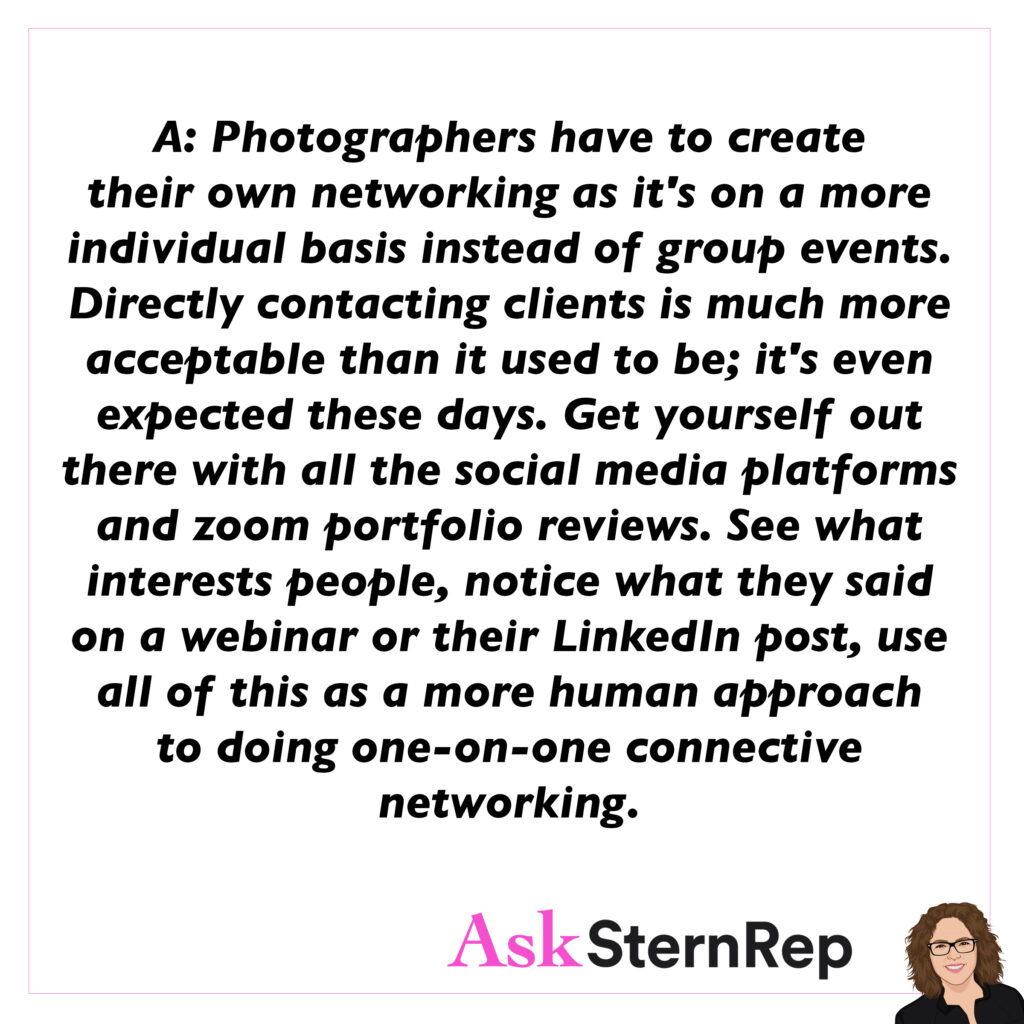
In today’s world I think clients expect us to follow their IG. It actually amazes me how easy it is to communicate with clients who were hard to reach before. I see FB as the more personal one. Follow them on IG and engage, engage, engage!
Overtime is tricky because even if you think the client will be expecting it, don’t take any chances. They hired you as the director, controlling the day, offering strategic steps to look out for their best interest. Bring it up before it’s too late.
We have to talk about overtime. If you’re on a job and you see yourself heading towards overtime, talk with the client. Check in with yourself at lunch time, or early in the day. Ask yourself, “Where are we?” Are you falling beyond or you’re not getting all the shots done in the 10 hours. Overtime was probably already discussed with the client in an email and it’s on your contract or even talked about on the phone, but don’t count on that. Talk to them or have your producer talk for you or your rep. The client has to know in advance because they might not have the budget and it’s your responsibility. Even if they’re trying to add shots and you’ve said ok. Also, the amount of overtime has to be approved, such as how many hours of overtime and for how many people. You don’t want any surprises and you never want to hand it to your client and say, “Surprise!” You have to protect yourself.
You are in the business of keeping it fresh for your clients, so keep your own company fresh.
People are keeping it fresh, and what I mean is that they’re trying new things. Producers, consultants, reps, and photographers. All of us are doing something new and trying to market ourselves in a new way. We have people we want to hire us to keep them fresh, why wouldn’t we keep it fresh? Brainstorm with people you work with, even if you say no to their ideas, it gets your brain working on new ideas. Try new things, new equipment or a new posting on Instagram. Try something new that you don’t know. Try the unknown and make it something you work on. We talk about testing all the time. Test, test, test. Push yourself to keep yourself fresh. Put it out there, whether it’s something you’re interested in, or sharing who you are, or something you’d be bringing to a job or shooting more motion. There’s so many things you can do to show that you’re a fresh thinker.