Hi Andrea, how do you charge clients after a campaign shoot, after they made the agreed amount of selects, they ask for additional images with no edits for them to have extra content for product pages, emails, etc? Thank you!
A:
This is your golden opportunity to create some package deal options for them to buy more image usage.
Final image from a temp rep job for photographer Vinnie Finn.
Photographers in the commercial advertising industry can face complex unmapped territory, especially when invited by a client to submit a bid to get a job. Photographer’s agents are the trusted resource supervising every step of the bidding process to ensure it goes smoothly, helping land the job. Finding a rep to help with bidding negotiation can get tricky; we here at AskSternRep are all about demystifying the photography business, so our team sat down with our founder and photographer’s representative of SternRep, Andrea Stern, for a Q&A on Freelance Temporary Representation.
AskSternRep Team: Let’s start with the basics: what IS Temp Repping, and how is it priced?
Andrea Stern: “Temp Rep” is how I join forces with un-repped photographers on a per-project or per-client basis when they want a rep’s help on their bid request, image licensing rights, copyright ownership, reuse, or renewal fees. Whether a photographer only needs me behind the scenes for advice or wants me to be their voice communicating the negotiation with the client, I bring my 100% dedication to treating each case with my utmost attention.
Temporary Representation is how I jump in to be on the photographer’s side wherever they need it. I’ll oversee the bidding process, assessing our needs to get this job. Do you have the right producer, or will we create the bid for you to produce your job? Are we getting all the correct information from the client to support an accurate estimate? Are your bid terms clear and set up to protect you on this specific production? Let’s make the best of the creative call and your treatment without leaving any money on the table when we land this job.
I charge a commission on the photographer’s fees between 15 – 25% only if we get the job. No charge if we don’t get the job; I get paid if you get paid.
ASR: How and why did you start offering Temp Repping?
Andrea Stern: Temp Repping created itself in 2015 when photographers who knew me started reaching out, needing a freelance rep as they didn’t want to negotiate jobs independently. At the same time, it worked on both ends of the business as client-direct brands and producers started reaching out with mass searches for photographers for a specific project. When I could be helpful on both sides, it was easy to do what I enjoy most no matter what the configuration looked like – I rep photographers to help them get the job. The commercial advertising business started shifting this way, where broader doors were opening, making it easier for un-repped photographers to get their foot in the door.
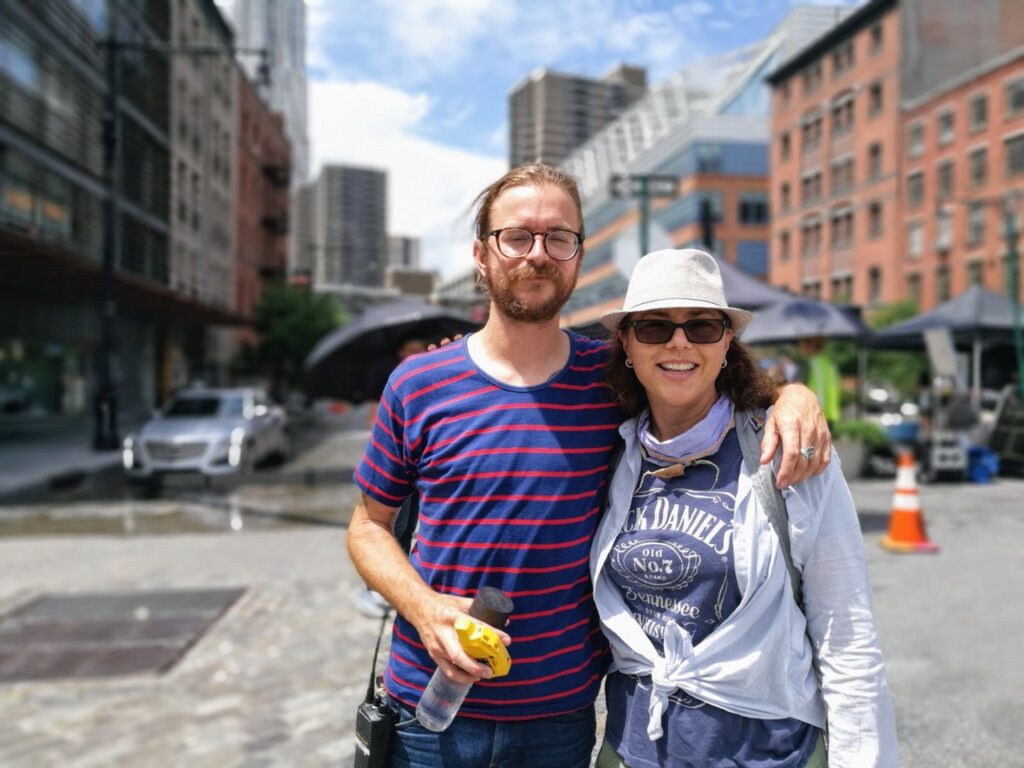
BTS: Andrea Stern on set with SternRep photographer Jeff Stockwell in NYC for Cadillac.
ASR: How often do you Temp Rep for photographers?
Andrea Stern: Over the years, it’s become a regular recurring position as many photographers can use a rep temporarily. These mainly happen not on a one-time basis but more of an ongoing relationship we are building. It’s a great way to get to know the specifics of each photographer and how they work.
I have worked with over 100 un-repped photographers bidding with clients, including Magnolia Bakery, Sonic Drive-In, Audi, HGTV, Chevy, Merrell, NFL, Adidas, ESPN, Sunbrella, DirectTV, Jack Daniels, State Farm, Delta, Pacifico, HP, Lexus, Target, Disney, Purina, Airbnb, Priceline, Timberland, Darigold, Chase Bank, Bosch, Duluth Trading Co, and Title Nine.
ASR: How does a photographer know they need a Temp Rep? How is it helpful?
Andrea Stern: Almost every job I bid on with my photographers involves a team, as that is how our business works. When bidding on a project that feels over a photographer’s head regarding ease, communication, finances, and production, they should always involve support. Clients may get nervous if it’s a more significant production and the photographer is on their own.
The benefits of having an agent represent a photographer in our commercial advertising industry are endless if you can trust the Rep you are working with. A representative offers solid protection on the bidding process by overseeing terms, treatment editing, etc., and will get them paid fairly. It astonishes me that every photographer wouldn’t seek a rep’s help on every bid.
ASR: What criteria can help photographers decide if they need to get a rep involved when asked to bid on a job?
Andrea Stern: When a photographer is asked to bid on a job, the first thought should be to consider whether they should bring in a rep. If they’re unsure whether it’s worth it to bring in an agent, some great questions photographers can ask themselves are:
Do you feel comfortable/confident doing this alone?
How big is this job? Is there a high enough budget for this project to pay a rep 15%, 20%, or 25% of your fee?
Will a rep’s support make you an even stronger candidate to be awarded this job?
ASR: How does the process begin, and when should the Rep be looped in with the client?
Andrea Stern: When you receive a bid request, you should first decide if you want a rep to work with you on it before even responding. If we are representing you, we should be there from the start, as it’s well worth our commission to warm up the relationship with the client from the get-go. The more seamless the bidding process communication will be as soon as you get the agent involved.
ASR: Does being repped when bidding on a job influence an advertising agency’s opinion on how they will respect working with that photographer? Or does a rep sometimes freak out a client, signaling they will be more expensive to work with?
Andrea Stern: Clients familiar with reps are the ad agencies, and clients who tend to be unfamiliar with agents are smaller client brands with in-house marketing. I’ve seen how the type of client can affect the bidding process, so this goes into our team planning strategy before we move forward. Not to boast, but I haven’t met a client I can’t warm up quickly. I accept this challenge as one of my skill sets, where I begin with a soft and personal tone breaking that age-old harsh reputation that agents can have. However we approach this, it is a discussion where we consider the pros and cons, coming up with our game plan together.
ASR: Is there a “bid minimum” you like to have in mind when entering a temp rep engagement? (For example, should a job prospectively be at least 10/20/30K to interest you in offering your services?)
Andrea Stern: Generally, budget is not my deciding factor as to who I will Temp Rep; it is more about the type of industry. I’m unfamiliar with editorial, fashion, publication, or photojournalism rates, so I would not feel as helpful as I do with commercial advertising projects, so I stick with those.
ASR: Is there a limit to the jobs you would Temp Rep for one photographer?
Andrea Stern: No, the more times I work with a photographer, the better. I become more comfortable the more we work together. I base a lot of my negotiation on how that photographer works, so getting to know them more only helps me give more to each project.
ASR: Can a Temp Rep situation lead to joining a rep’s roster?
Andrea Stern: Yes! A couple of my Temp Repping situations have turned into full-time repping. Vinnie Finn, for example, started that way. Vinnie called me to help bid on a wine project in Sonoma County and several long-term projects after that. We had a great thing together; the longer we worked together, the more we knew we could do even better by joining forces full-time.
A Temp Rep situation can lead to an official rep engagement – so if a photographer is looking to get a rep, this can be a perfect way to get to know each other.
My suggestion for un-repped photographers is to research reps who match their style and type of clientele, ask around and do your due diligence to create a short list of reps who may be right for you. Get to know each other as we all have unique ways of working; get a rep who speaks accurately for you, even during a stressful job situation.
It’s a big commitment, and I’ve seen photographers regret signing on with reps; don’t rush the process, and make sure you get to know them first.
BTS: Andrea Stern on set with Photographer + Director Vinnie Finn
ASR: Why would a rep want to take on a Temp Rep job with a photographer?
Andrea Stern: Well, not to sound crass, but we are business minded and here to make money. We have what it takes, so why not put our skillset into action with the right opportunities? A rep does have a reputation to consider, so we want to represent those who will build our clientele and not damage our brand. We do have to be careful as our name goes into these temporary situations, and our company depends on building relationships. After the checks and balances, we will enjoy the opportunity if we can make money with you.
ASR: What do you enjoy most about Temp Repping?
Andrea Stern: The best part of my job is the relationships I create. If I can be helpful to get a photographer paid and well taken care of, then I’m all in. I enjoy selling the photographer with my moment-to-moment negotiation process, looking for ways to solidify the photographer’s relationship with the client. There’s a genuine advocacy to all of this, which is the most enjoyable part about repping- the confidence, belief, and cheering for talented photographers.
ASR: Any success stories you can share?
Andrea Stern: A photographer I have temporarily represented on a regular basis since 2017 has me listed as the agent to contact directly for incoming requests on their website. I am trusted without much back and forth to make decisions as they know I will get the best done for them. It’s a nice way to work, Temporary Repping but based on a solid long-term relationship.
We were in a situation where a company used two images after the usage rights expired. The client needed to be financially penalized for that unowned usage term and then wanted to extend the usage for three more years. This negotiation was a situation I could get the photographer paid more than they were expecting, which was extremely satisfying to make a successful renewal deal with one of our highest financial payoffs.
I knew I could start with a high rate, as the client wanted to avoid getting into a legal battle for their illegal photography usage rights. We got $140,000 for the two images for (3) years of packaging, social media, print, OOH, and in-store usage. It was fun to shock the photographer with that payment amount and feel that sense of success, but success is much more than that.
This long-term relationship with the photographer stands out to me as a real success because they permitted me to speak freely on their behalf, getting them compensated to the best of my ability. It’s nice to have that trust with photographers who use me as their Temporary Rep, but it doesn’t feel temporary.
Photographers are the package deal of stills/video/motion.
All are one and the same, treating each with equal importance as we raise our area of expertise to fulfill our client’s needs.
Being a photographer no longer means just focusing on stills. You need to keep up with the times, which includes incorporating video and motion into your work. This means creating GIFs, cinemagraphs, and having a reel as a director, whether you shoot it yourself or have a team help you. Your reel is as crucial as your website portfolio.
Both your website and reel need to be showcased on your Instagram as well. Video should be a strong element of your Instagram presence. If you don’t take video and motion seriously, it could significantly impact your career. So, get on it and stay ahead.
I am a photographer that is currently signed to an agency, the contract is nearing completion, and they have asked if I want to renew the contract. Another agency has expressed interest in signing me at the same time. Is it possible to be signed to multiple agencies as a photographer/director?
A:
No absolute rule on this, but it isn’t something I recommend for a commercial advertising photographer/director. Other industries may work like this, but clients in our world would be confused. Our goal is to have our clients know, think of, and contact us. If we offer too many contact associations, we may create more of a branding identity mishap vs. a sharp, concise system to register in their memory.
In the midst of crazy production, the human element cuts right through it and can speak volumes. Impress our crew + clients with sincere kindness during stressful intensity to make the best of it and create a lasting impression.
My long-time restaurant client plans to publish a cocktail book showcasing their cocktail recipes, all of which I have shot. She asked me about image licensing rights because I was so green when this started and did not send them contracts (I know, big fail). Ideally, I would like to send her a new contract for the images she’d like to use in the cocktail book, and I was wondering if this was the best course of action.
Answer:
The root of the issue with no contracts is how you and the client were both green. Uncontracted clients may assume they own the copyright without needing your usage approvals. The overall solution is to follow up with all uncontracted clients before an issue arises, verifying your image ownership and assuming usage rights. Talk to your clients, make this a two-way conversation asking what they’d like to use the images for in the future and become part of their long-term solution… for a price, of course.
A client returned to purchase a second round of images I shot for them. They would not pay me to retouch this 2nd batch of images because it was cheaper for them to outsource the post work. Now the images are live and online without any retouching or color correction… What could I say next time to prevent this from happening again?
A:
I don’t mean to be harsh, but the only thing you can do about this is offer cheaper retouching or request that your name not be associated with the images. Depending on their contractual terms, you can retouch them your way and show them off on your site and IG. Other than that, they have full rights to retouch/crop/manipulate the images you shot any way they choose.
When offered an exciting job for a low budget, you can always offer your time and usage licensing for a discounted rate while having the client handle all production. If you feel you can create high-quality images, these jobs require clear terms of what you are and NOT including.
Sample Negotiation:
Client: How much would it be to shoot this?
You: I don’t have enough information to give you an accurate price. What is your budget?
Client: We have $2000.
You: For a $3500 discounted rate, I would do this for one month of social media for four final images within an 8 hour shoot day, and that does not include any production expenses only my time.